Showing posts with label mobile security. Show all posts

Sunday, May 8, 2016

Where can you get more privacy when messaging?


Image courtesy of 3RI at Flickr.com
Are you wondering whether you should be using BlackBerry or WhatsApp Messenger? If you care about your privacy, you should seriously consider using BlackBerry. Right now it is a much safer and reliable alternative to keep your conversations private than WhatsApp. In 2013, new versions of instant messaging system for iOS and Android mobile devices were launched, and a week after that, BlackBerry Messenger had added 20 million people more, making the platform reach 80 million monthly visits. There is clearly evidence of a great interest.

BlackBerry Messenger was one of the first differential services of the company and security and privacy are two of the key features they focus on. It operates on the private network owned by the company. A large number of government security agencies have tested and approved this platform. They actually use it as well as banks and other multinational companies given that all messages sent by BlackBerry Messenger are encrypted. They are exchanged crossing the infrastructure of the company which has interconnection with a high number of carriers worldwide. This is important because it means that your message has to travel through less points to reach its recipient. So, you will see that the risk of third parties intercepting your message is highly reduced. The relationship BlackBerry has had with many telecommunications companies for so many years has led to the creation of this strategic advantage.

However, many users identify “BlackBerry” with the past; they tend to imagine plastic phones with keyboards that would allow you to check emails and send messages. Evidently, it is true. This company is one of the pioneers in the “revolution” of smartphones. In spite of the big effort in recent months to meet competition standards, this brand does not seem to achieve breaking off completely from the image they have of last century technology. However, it does not mean that their products and services are also out of date.

So, if BlackBerry Messenger offers the security and reliability that you should demand from any communication platform and WhatsApp has been proved to have so many security problems such as anyone can read your conversations, why is it more popular and has more users?

Image courtesy of Johannes Marliem at Flickr.com
WhatsApp is a simple communication cross-platform that works at a very low cost; one dollar per year. It came along at the perfect time with versions for all popular operating systems at the moment which were iOS, BlackBerry, Symbian –believe it or not- and Nokia S40. It became popular quite soon given that these type of applications were basically new and there were no many competitors which favored its position as leader. Shortly afterwards, versions for Android and Windows Phone were finally launched. Nowadays, it has millions of users and everyday it attracts more and more people around the world.

The model of this app is brilliant but the implementation is not, especially when it comes to privacy issues. There are still many questions regarding security, such as:

  • Does WhatsApp save conversations? If it does, for how long?
  • What happens to the messages from the moment they are sent until the recipient gets it?
  • Why has WhatsApp taken so long to implement encryption in the chats?
  • Why does it allow to access the system without a safer process that require a password to login? It is understandable that it makes things easier, but that is not a real justification to risk privacy.
  • What does WhatsApp do with phone numbers besides using it as a user in the system?
  • Why are WhatsApp efforts minimal for general security?
It is difficult to find answers to the questions and doubts about the company behind the service. What it is known for sure is that WhatsApp is not observed, in any way, by any government around the world which is curious because they are in charge of regulating telecommunications companies. Doesn’t it make it more dangerous?

In conclusion, it seems to be a good idea to replace WhatsApp by BlackBerry Messenger. It does not require annual subscriptions that appear by surprise because it is free. It has a multi platform -except for Windows Phone- and the most important aspect is that it is really safe. You might think that you do not need a safe platform because you don’t think you exchange interesting information.

However, you never know when you will end up talking about someone with your friends, or discussing sensitive work matters and even sharing documents, pictures or videos that can be used to harm you. The security system of BlackBerry Messenger is not perfect but you can trust in it. Some people keep saying that BlackBerry is so last century… Well, you might find interesting that Apple was founded 18 years earlier and it is still a company leader in the field of telecommunications. It is just a matter of perceptions.

Monday, January 25, 2016

4 Free Mobile Apps That Increase Data Security

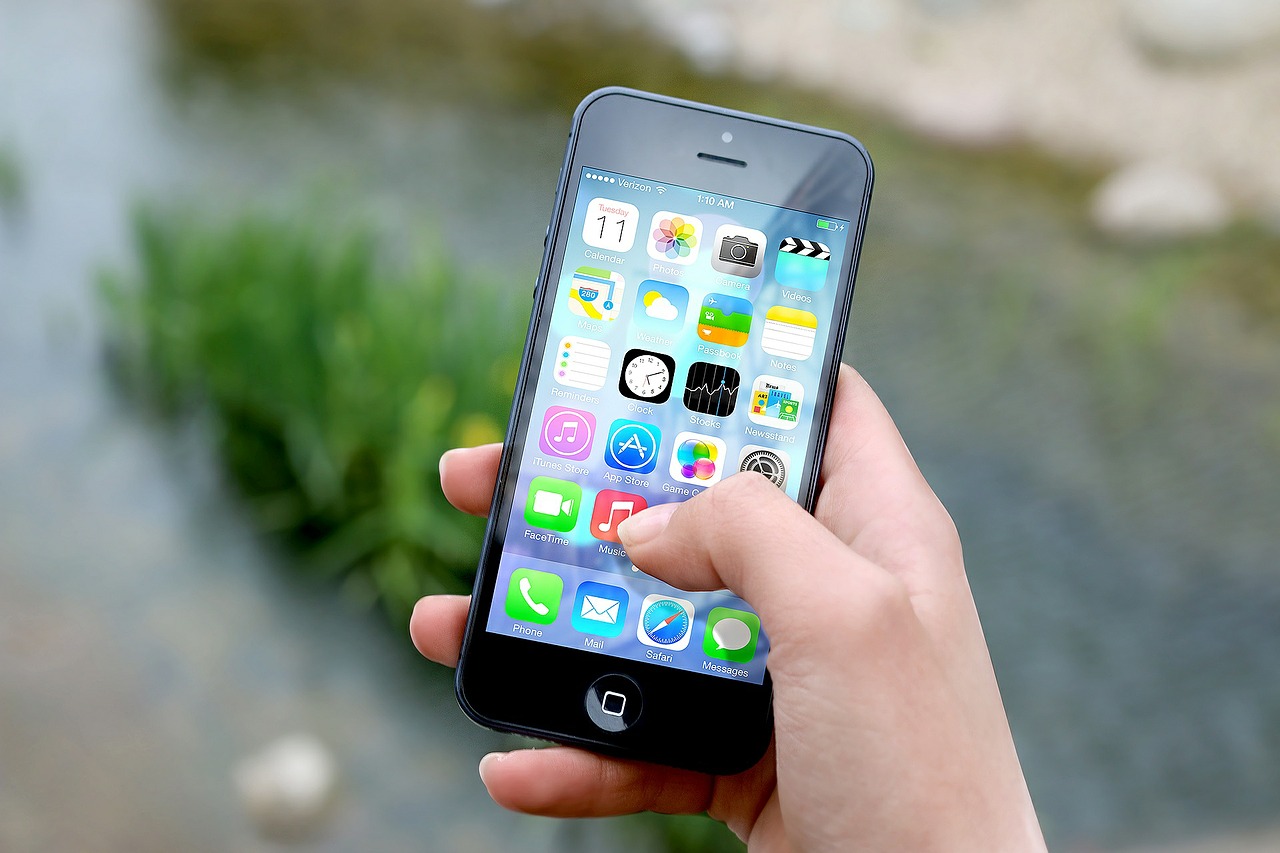
Mobile phones have revolutionized communication in the past few decades, and smartphones enable people to do handle more of their personal and business tasks without being tied to a landline or personal computer. Estimates show that a growing number of Americans have even completely given up their landline in favor of using their mobile phone as their sole phone.

With so much data stored in devices that are inherently at higher risk of being lost or stolen, security is obviously pretty important. Modern phones are equipped with stock security features out of the box, but depending on your usage this may not be enough. The following free mobile applications can be installed to augment standard security features and give you peace of mind should anything happen to your phone.

1. Red Phone – Security for Phone Calls

If you frequently find yourself making phone calls in which sensitive information is shared back and forth, or you just desire more privacy, call encryption may prove extremely valuable. Developed by Open Whisper Systems, Red Phone works by encrypting calls placed from your regular phone application, but the actual transmission is over Wi-Fi or cellular data and does not affect your carrier-allotted minutes. The main advantage of this is that your cellular provider does not have access to any data associated with the phone calls you make. Calls that you make will not appear on your monthly statement, so prying eyes cannot see who you have been in contact with. The Red Phone app, which is offered as a free download, is currently available only for Android devices.

2. Enlocked – An Added Layer of Privacy for Email

If you fall within the category of smartphone users that need a bit more privacy when using email, Enlocked is an application that makes the experience infinitely more secure. Data breaches occur via email at an alarming rate and unfortunately stock smartphone email applications simply cannot guarantee that this won’t happen to you.

Enlocked works in conjunction with the most popular email applications such as Outlook, Yahoo Mail, and Gmail, as well as Exchange email accounts that are often used for corporate email communications. Rated “excellent” by PC Mag and recipient of their Editor’s Choice award, Enlocked has consistently receives solid reviews from its users. Available for both Apple and Android devices, Enlocked can be downloaded for free for the App Store and Google Play, respectively.

3. Wickr – Secure Text Messaging

Times have changed, and people are using text messaging at astonishing rates. Carriers for the most part have adopted unlimited text messaging as part of their cellular service plans. People not only use texting for their personal use, but also as a way to communicate business and other sensitive information.

The San Francisco-based software company Wickr has created an application that boasts “military grade encryption” for text messaging. Not only are text messages encrypted, all messages routed through the Wickr app have an expiration date ranging from a few hours to several days depending on individual user settings within the app. This is great for people who are sending sensitive data and don’t want to run the risk of data being compromised or referenced at a later time. Wickr’s Shredder feature allows you to remove pictures, texts and videos from your device and destroys any traces that they were ever on your device. Wickr is available for both Apple and Android smartphones and is also available as a desktop application for Windows, Mac and Linux computers.

4. CoverMe – Multipurpose Security

While most smartphones include a feature that allows you to lock your device in order to keep intruders out, there are limited options to secure individual applications. Once your phone is unlocked, photos, videos, contacts and text messages are vulnerable and can be accessed by anyone. CoverMe addresses this problem by providing application-level security in the event that your phone’s standard security features are bypassed somehow.

For phone calls, CoverMe gives users multiple options for masking their information when placing calls. Much like Wickr, CoverMe offers military grade call encryption, and you can also conceal call logs, contact information, and text messages from prying eyes. While CoverMe is a free download for both Apple and Android devices, prices for premium features start at $4.99.


Smartphones are powerful computers and often contain data that could be potentially harmful to our personal or professional lives. As smartphone technology becomes increasingly sophisticated, security is increasingly becoming more of a necessity and less of an afterthought. No matter how you use your phone, if you require a higher level of privacy for personal or business use, try some of these apps to see if they’re right for you.